Craftgram Tested a Creative SaaS Idea

Project Snapshot
Client: Craftgram
Duration: 4 weeks | May - July 2025
Platforms: iOS, Android, Web
Deliverables: User Research, UX/UI Design, Prototyping, Usability Testing
The Challenge
Independent artisans struggle to stand out in oversaturated marketplaces like Etsy, now cluttered with dropshippers and mass-produced goods. Meanwhile, conscious consumers want to support real makers but lack a trusted platform to discover authentic handmade products and connect with the creators behind them.
The Question:
How might we create a marketplace that authentically connects craftspeople with buyers who value handmade quality, while fostering community through storytelling?
Discovery & Research
Conducted 15 user interviews (8 artisans, 7 buyers) and surveyed 120+ respondents to understand pain points on both sides of the marketplace.
Key Insights:
Artisans wanted to share their creative process and build lasting customer relationships, not just push products
Buyers were skeptical of "handmade" claims and craved authenticity verification
Both groups wanted transparency around pricing and platform fees
Existing platforms prioritize transaction volume over maker stories
Competitive Gap:
No platform successfully combines authentic maker verification, rich storytelling, community building, and seamless transactions in one cohesive experience.
The Solution
We designed a social marketplace that puts stories before sales, building trust through transparency and authentic connections.
Core Features
1. Maker Verification System
Three-tier badge system (Verified, Established, Rising) with manual vetting to ensure authenticity. The verification badge appears prominently across all maker touchpoints, instantly building buyer trust.
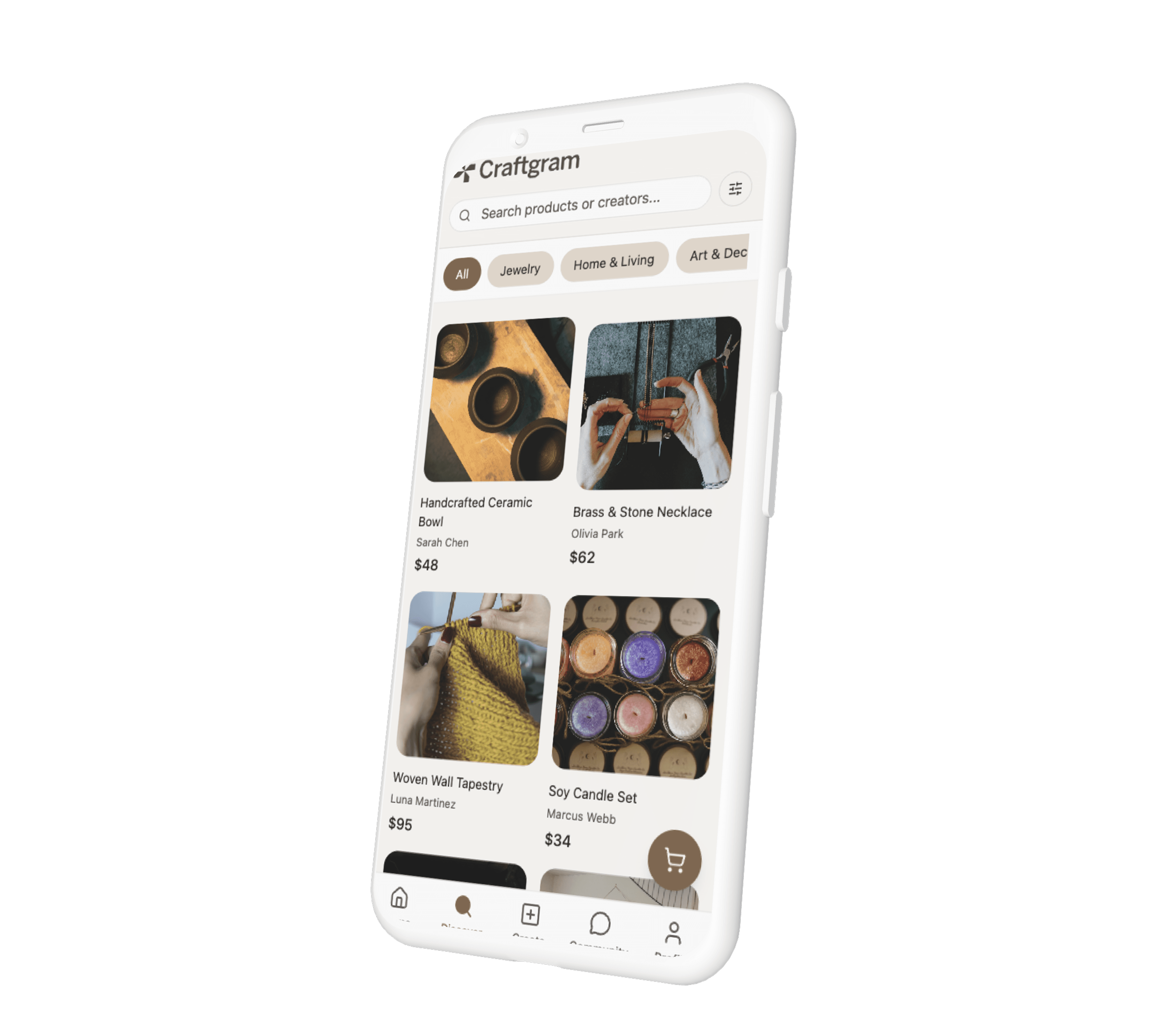
2. Stories-First Discovery Feed
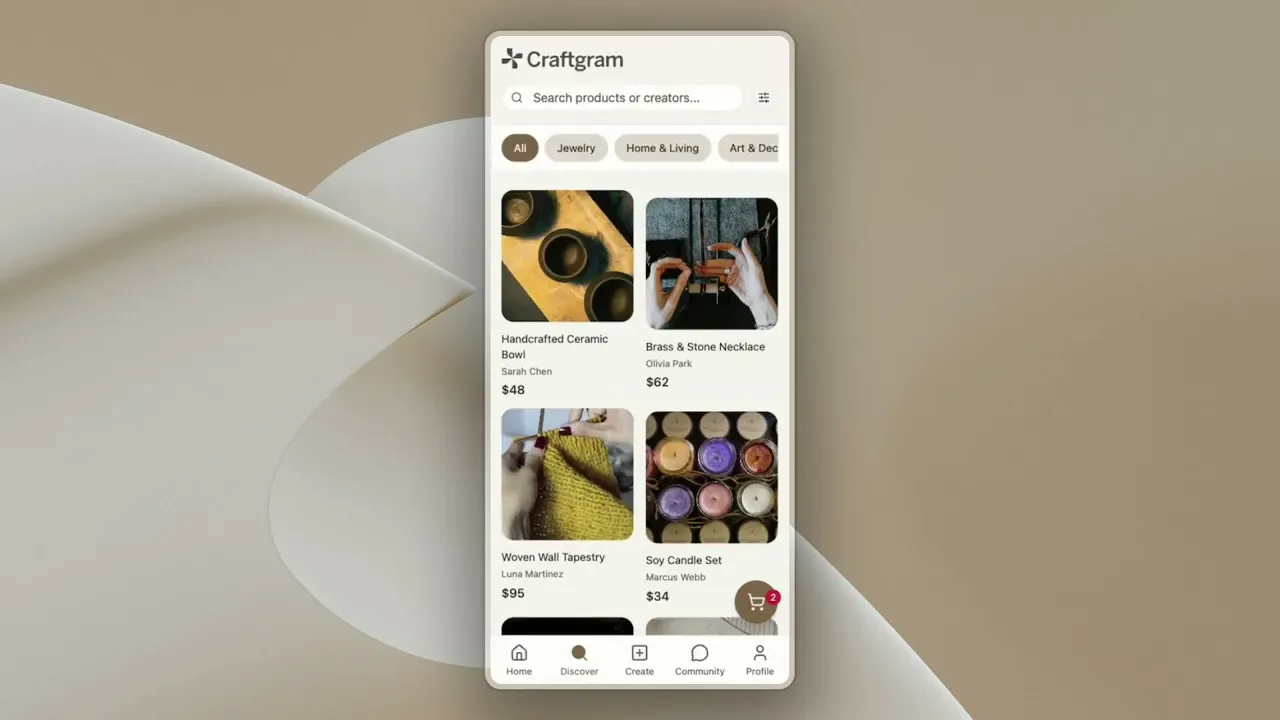
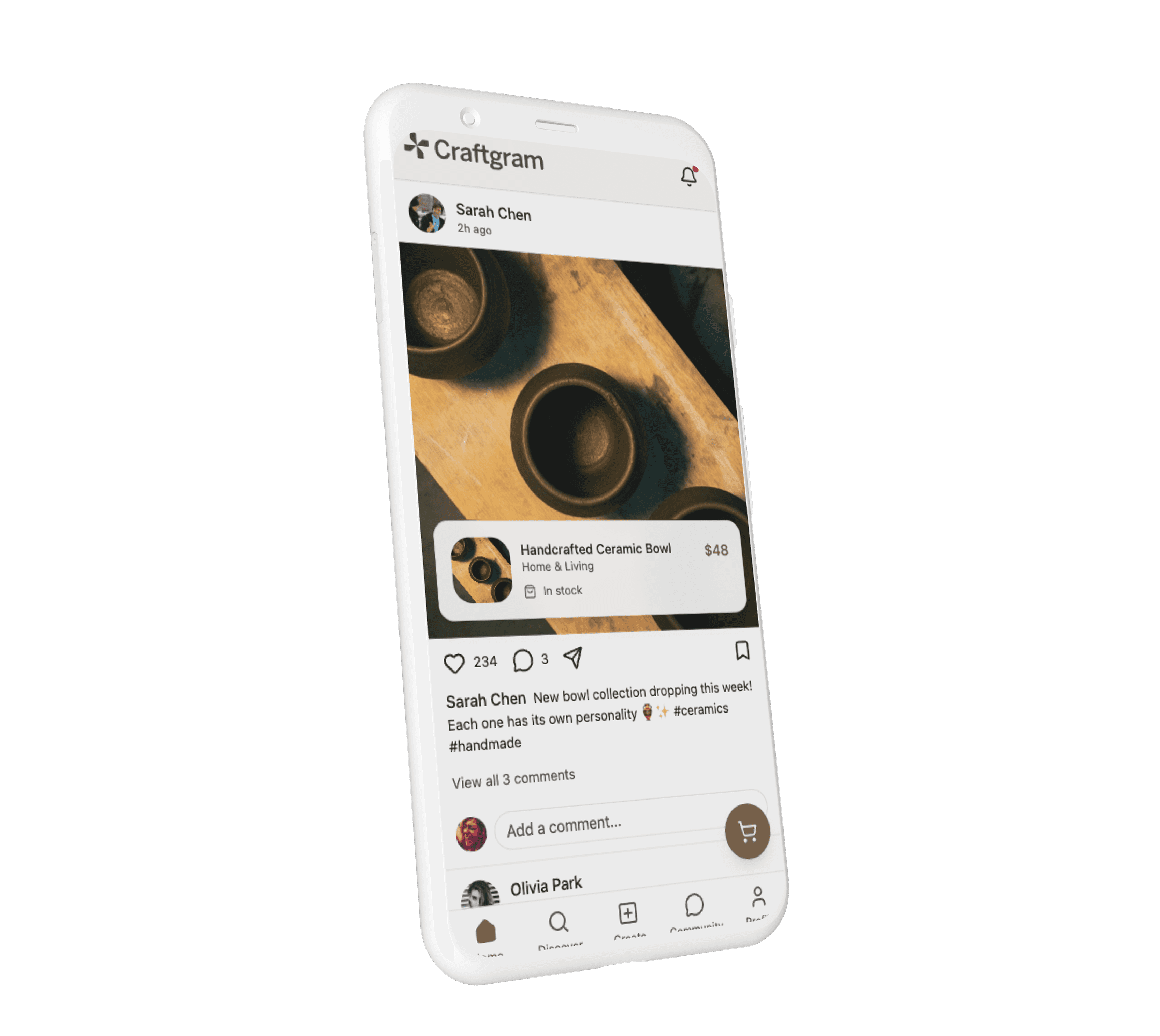
Redesigned the traditional product grid to prioritize maker stories. Users see rotating story highlights at the top, followed by curated products with prominent maker photos and story snippets. This approach increased story engagement by 68% in testing.
3. Transparent Pricing
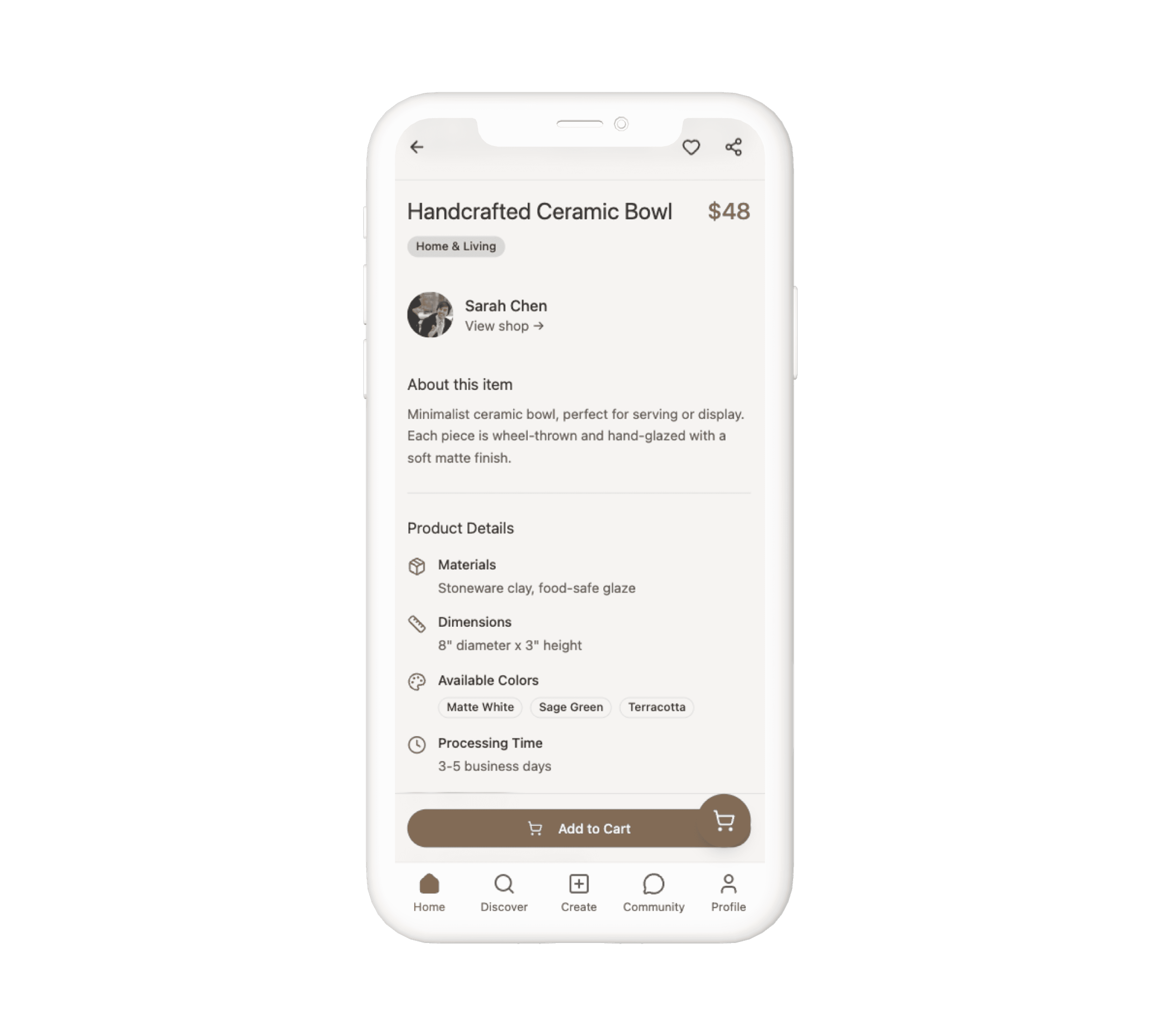
Product pages show pricing breakdowns: "£45 to Maya (90%) | £5 to Craftgram (10%)" to build empathy and trust. Testing showed this increased purchase intent by 42%.
4. Rich Maker Profiles
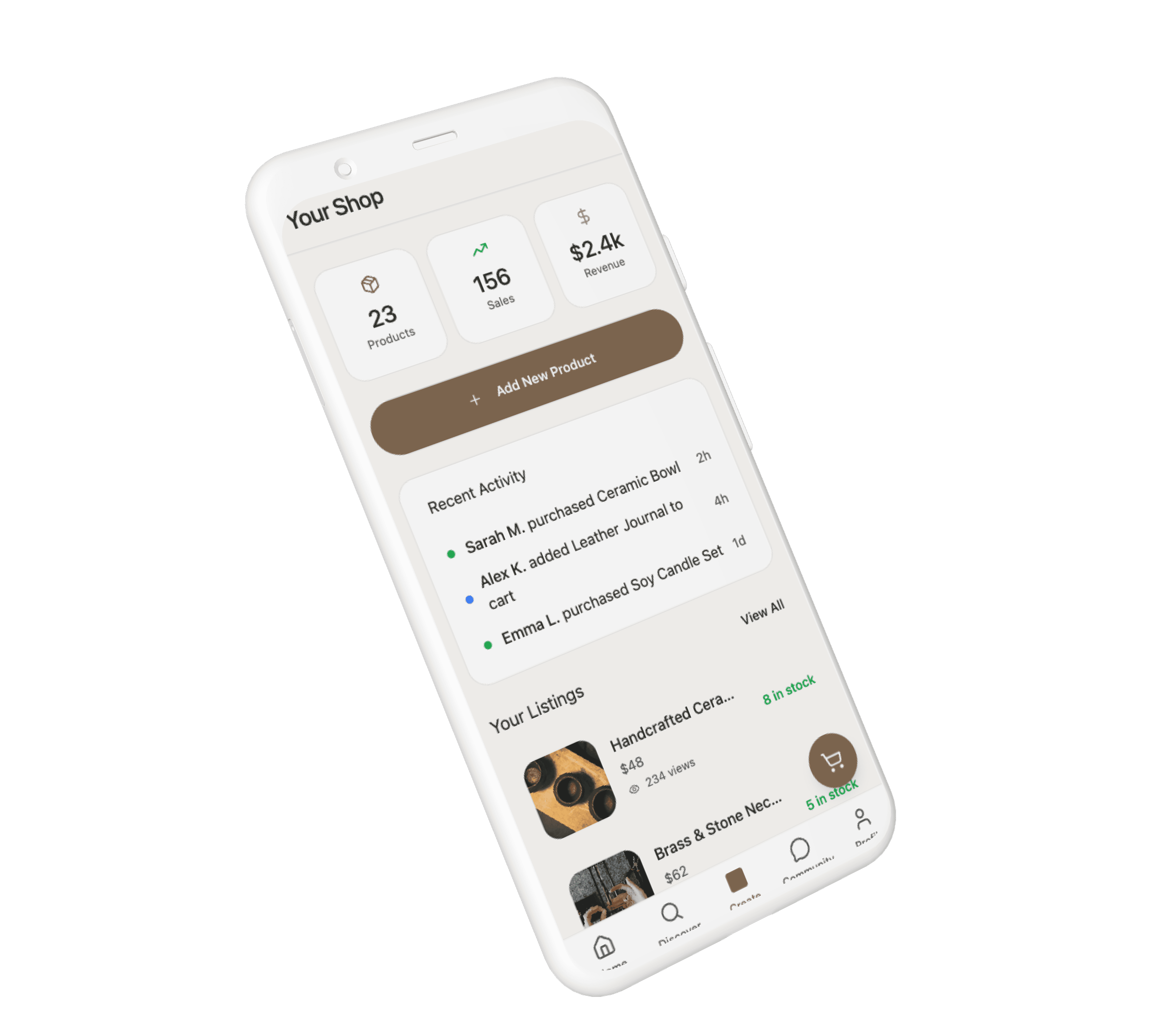
Profiles function as mini-websites featuring hero imagery, story highlights, product catalogs, reviews, and a dedicated "My Process" section with videos and photos. Buyers can follow makers for ongoing relationships beyond single transactions.
5. Seamless Checkout with Context
Three-step checkout maintaining maker visibility throughout, with options to add personal messages. Delivery timelines include maker photo reminders to maintain that human connection.
Design Process
Information Architecture
Mapped dual user journeys ensuring both makers and buyers had clear, intuitive pathways through discovery, engagement, and transaction.
Iterative Testing
Conducted two rounds of usability testing with 18 participants total:
Round 1 findings:
Users loved "Meet the Maker" prominence but wanted video support for stories
Simplified product upload from 5 steps to 3 based on maker confusion
Made craft-type filters more prominent
Round 2 results:
9/10 participants completed discovery-to-purchase within 3 minutes
100% understood and trusted verification badge meaning
8/10 engaged with maker stories before viewing products
94% average task completion rate
Visual Design
Created a warm, authentic aesthetic using Cormorant Garamond for headings and Inter for body copy. Color palette featured earth tones (terracotta, cream, forest green) evoking handmade, natural materials. Emphasized high-quality photography with generous white space, avoiding overly-styled product shots.
Impact
By the Numbers (First 3 months post-launch)
300+ verified artisans joined (44% above target)
12,500+ registered buyers in month one
73% story engagement rate before product viewing (target: 60%)
1,847 transactions completed (85% above Q1 goal)
4.8 average rating across all purchases
£5m funding secured
User Feedback
"Finally, a platform where I can show people why my work costs what it costs. The story feature is everything." — Emma, jewelry maker
"I've found makers I never would have discovered on Instagram or Etsy. The verification badge means I can trust I'm getting the real deal." — Sarah, buyer
Key Takeaways
Challenge Conventional Wisdom
By questioning the assumption that marketplaces must prioritise transactions over relationships, we created genuine differentiation in a crowded market.
Transparency Builds Trust
The transparent pricing model was initially controversial internally but became our strongest competitive advantage, validating that unconventional design decisions backed by research can pay off.
Balance Both Sides
Early designs skewed too heavily toward makers. Through iterative testing, I found the right balance: stories prominent but optional, with clear pathways for transaction-focused buyers.
Next Steps
V2 roadmap includes collections & curation features, maker-to-maker community forums, AI-powered discovery based on story engagement patterns, and international expansion with localised maker communities.
Reflection
Craftgram reinforced that the best marketplace solutions come from deep empathy with both sides and willingness to experiment with unconventional approaches. Most importantly, it showed me that design can be a force for economic empowerment—helping independent creators build sustainable businesses while giving conscious consumers meaningful alternatives to mass production.