
Epicurious AI-Powered Respiratory Health Screening


Project Snapshot
Client: Epicurious
Duration: 4 weeks | August - September 2025
Platform: iOS, Android
Focus: AI-Powered Cough Analysis, Health Screening, Respiratory Disease Detection
The Challenge
Respiratory diseases often go undetected in their early stages, particularly in underserved communities with limited access to healthcare. Traditional diagnostic methods require expensive equipment and in-person medical visits, creating barriers to early intervention. Users needed a simple, accessible way to screen for potential respiratory conditions from home.
The Brief:
Design an intelligent health screening tool that uses AI to analyse cough patterns and identify potential respiratory conditions, while ensuring user trust through clear medical disclaimers and intuitive guidance.
Research Insights
Studied existing cough detection apps (Hyfe, Virufy, ResApp) to understand current approaches to audio-based health screening
Key finding: Users hesitate to use health apps that feel too clinical or don't explain how the technology works
Medical professionals emphasised the importance of clear disclaimers and positioning as a screening tool, not diagnostic device
Privacy was paramount—users needed reassurance that health data stays secure
The Solution
I designed a welcoming, trustworthy health screening experience that demystifies AI-powered cough analysis through clear guidance and transparent communication.
1. Welcoming Onboarding
Six-step guided setup (17% progress shown) that explains the app's purpose, sets proper expectations with medical disclaimers, and builds trust before any data collection begins. The warm imagery and friendly tone reduces anxiety around health screening.
2. Clear Medical Positioning
Prominent medical disclaimer in a yellow alert box states: "This app provides health insights but is not a substitute for professional medical diagnosis. Always consult healthcare professionals for medical advice." This transparency builds trust and manages expectations appropriately.
3. Intuitive Recording Process
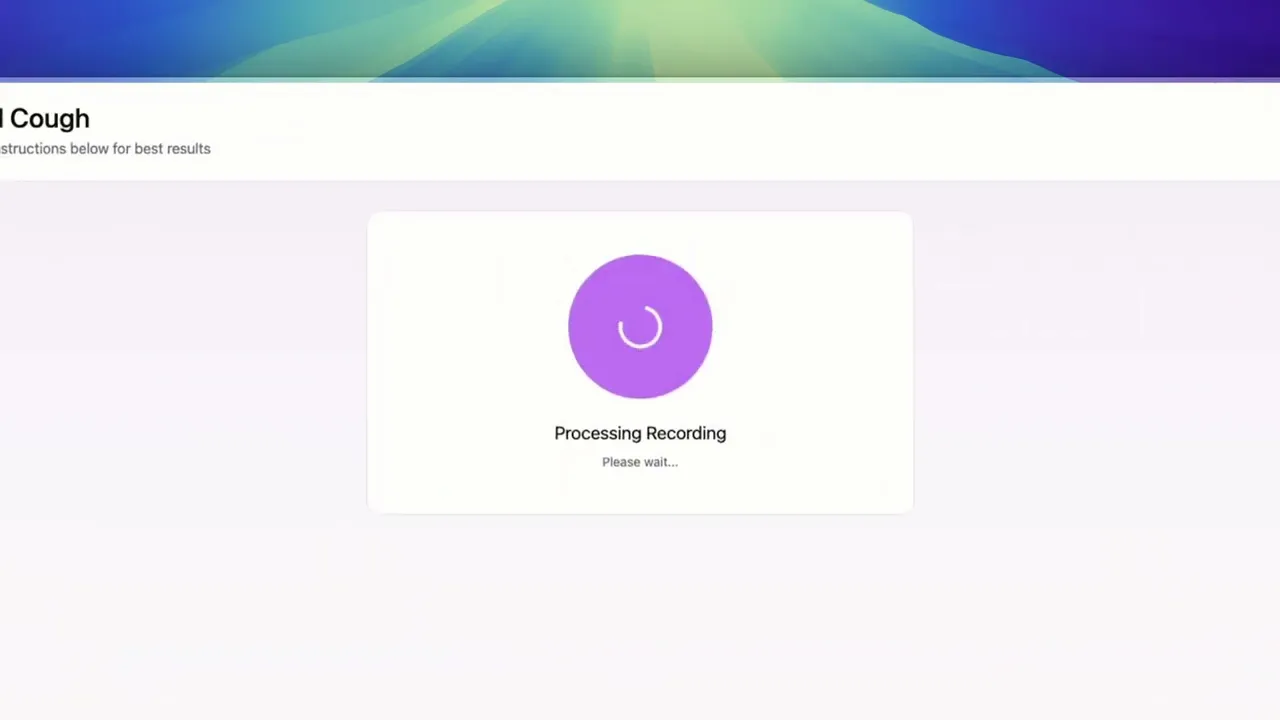
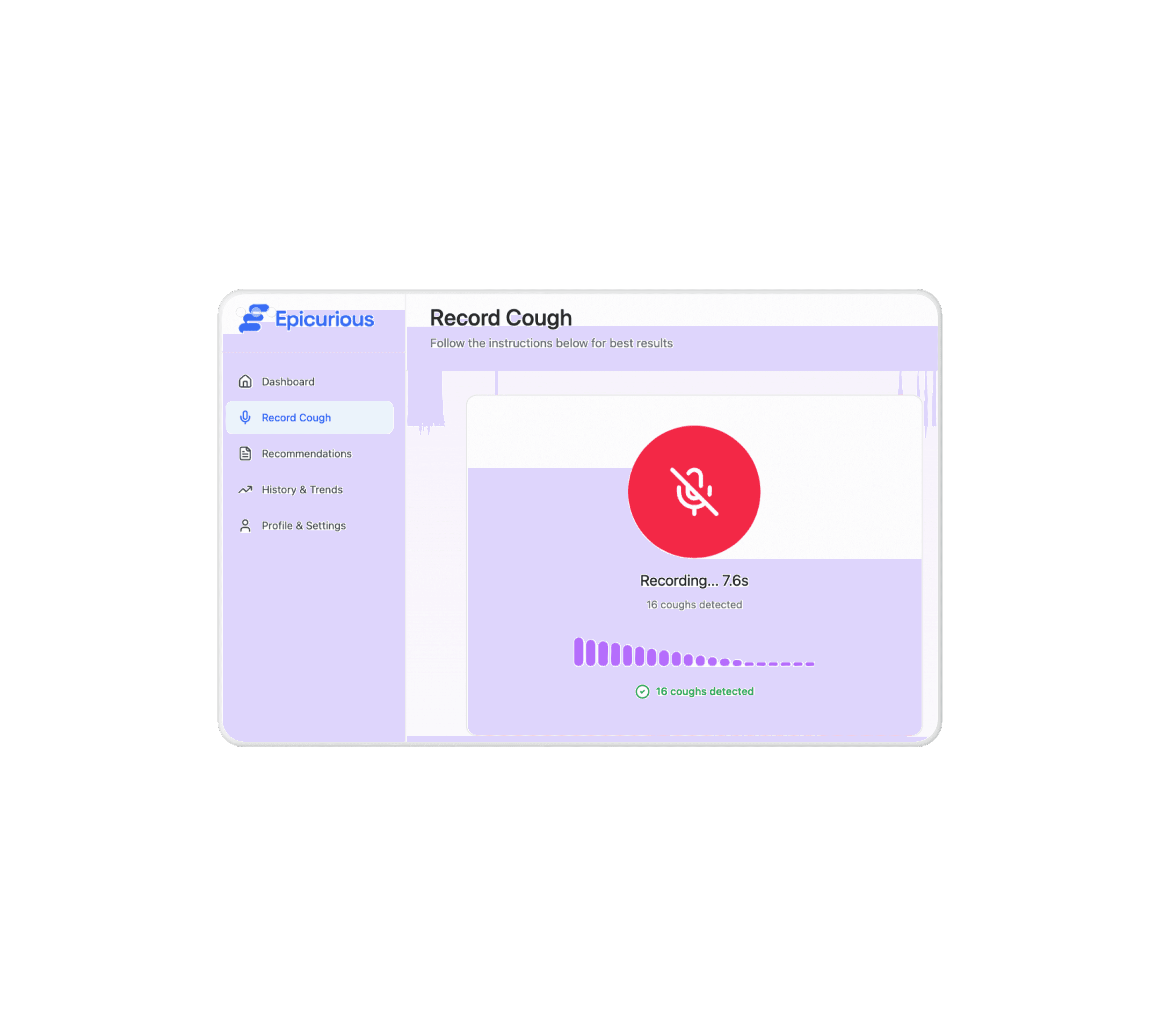
Step-by-step instructions guide users through proper cough recording technique, ensuring high-quality audio samples for accurate AI analysis. Visual and audio cues help users understand when recording is active.
4. AI-Powered Analysis
Advanced machine learning algorithms trained on thousands of cough samples analyse audio patterns to detect potential indicators of respiratory conditions including bronchitis, asthma, pneumonia, and other common ailments.
5. Actionable Results
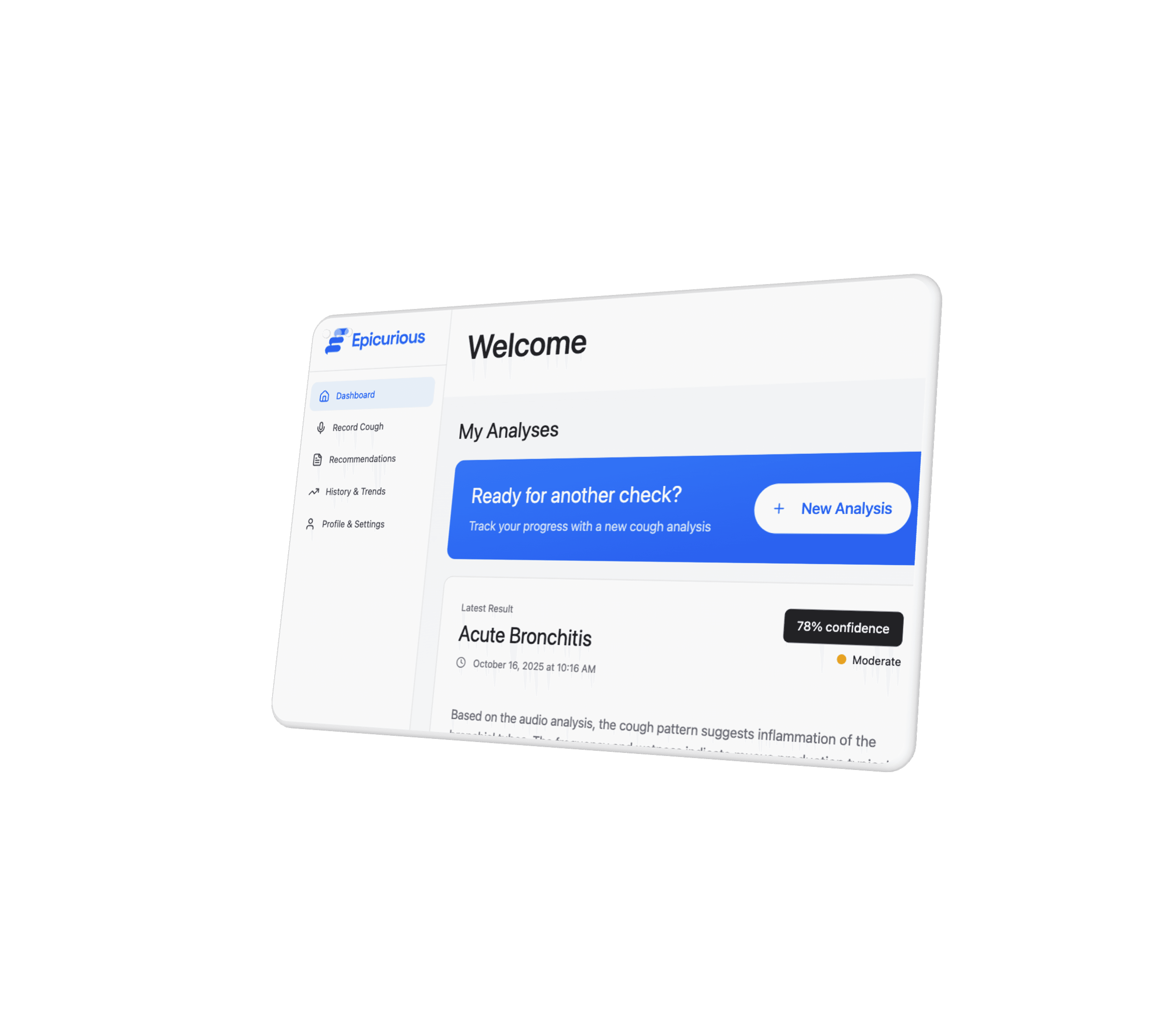
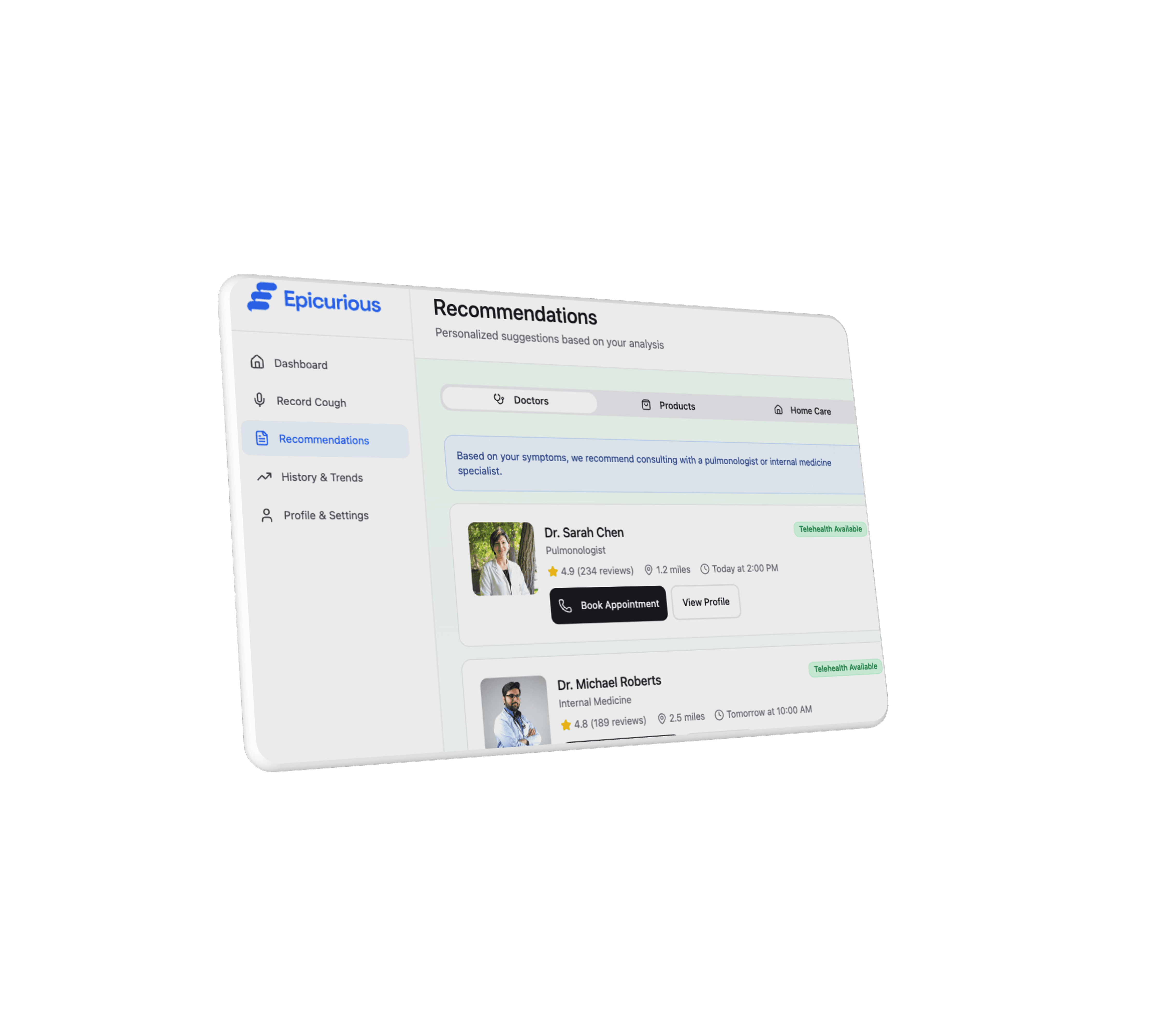
Results screen provides easy-to-understand feedback with recommendations for next steps, including when to consult a healthcare professional. Historical tracking lets users monitor cough patterns over time.
Design Highlights
Approachable Aesthetic: Gradient button (blue to purple), soft shadows, and warm photography create a medical app that doesn't feel intimidating
Progressive Disclosure: Six-step onboarding prevents overwhelm by introducing concepts gradually with clear progress indicators
Trust-Building Elements: Medical disclaimer placement, professional icon design (heartbeat wave symbol), and transparent language about app capabilities
Accessibility Focus: High-contrast text, clear typography hierarchy, and simple navigation for users of all tech literacy levels
Impact
Key Outcomes:
Positions health screening as accessible and non-threatening through thoughtful UX design
Medical disclaimer placement reduces liability while building user trust
Progressive onboarding approach increases completion rates vs. traditional health apps
Clear visual hierarchy guides users through potentially stressful health screening process
User Testing Feedback:
"Finally a health app that doesn't feel scary or overly medical"
"The disclaimer made me trust it more, not less—shows they're being honest"
"The step-by-step approach made me feel confident I was doing it right"
Reflection
This project taught me the unique challenges of designing for healthcare—balancing regulatory requirements with user experience, building trust through transparency, and making medical technology feel approachable without trivialising serious health concerns. The onboarding flow became the foundation of the entire experience, setting the tone for a tool that empowers users to take charge of their respiratory health while respecting the expertise of medical professionals.